Author: Rose Miyatsu
-

New eDNA Explorer provides a powerful new resource for conservation
CALeDNA, a UC-wide consortium project to document California’s biodiversity, has launched a prototype of their new eDNA Explorer. This open-source tool provides a powerful and easily accessible platform for sharing, exploring, and analyzing data from projects that use environmental DNA.
-

Working to improve clarity for patients assessing their genetic breast cancer risk
“I would say there are 2,500 variants conservatively that we hope to be able to curate right off the bat based on these assessments,” Cline said. “For women who carry these variants, that means not carrying the uncertainty.”
-

Anti-Racist symposium challenges participants to envision a more inclusive genomics
Rose Miyatsu | UCSC | June 5, 2023 On May 19, members of the UC Santa Cruz Genomics Institute gathered to participate in a half-day symposium aimed at strengthening our commitment to anti-racist action and sparking conversations about how to make genomics a more inclusive field. The event hosted four guest speakers, a panel of…
-
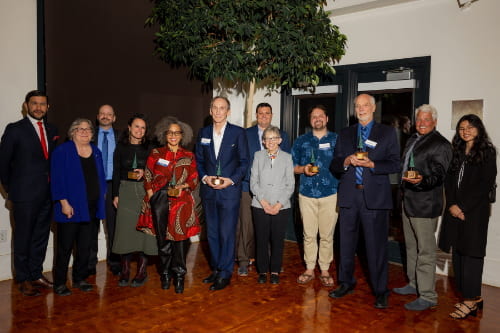
Russ Corbett-Detig, David Deamer, and Mark Akeson receive Chancellor Innovation Awards
UC Santa Cruz announces recipients of Chancellor’s Innovation Impact Awards The awards recognize transformational work across UC Santa Cruz – in the arts, engineering, humanities, physical and biological sciences, and social sciences. Sandra Messick | UCSC | June 2, 2023 Tracking COVID-19, DNA sequencing, and prison abolition were among the groundbreaking research and creative scholarship…
-

Human pangenome reference will enable more complete and equitable understanding of genomic diversity
Emily Cerf | UCSC | May 10, 2023 Read on the UCSC News Center. UC Santa Cruz scientists, along with a consortium of researchers, have released a draft of the first human pangenome—a new, usable reference for genomics that combines the genetic material of 47 individuals from different ancestral backgrounds to allow for a deeper,…
-

A draft human pangenome reference
Abstract Here the Human Pangenome Reference Consortium presents a first draft of the human pangenome reference. The pangenome contains 47 phased, diploid assemblies from a cohort of genetically diverse individuals (source). These assemblies cover more than 99% of the expected sequence in each genome and are more than 99% accurate at the structural and base…
-

Special Zoonomia issue of Science offers fresh insights on human, and canine, evolution
This article is about a series of 11 papers published in a special issue of Science. The research was made possible in part by the Cactus alignment tool created at UC Santa Cruz and contains exciting discoveries by a number of our scientists. For additional coverage of the Zoonomia papers, please see “DNA analysis can…
-

Genomics Institute postdoc mentors budding entrepreneurs through Clinton Global Initiative University
Schneider has been a mentor for the Clinton Global Initiative University in the area of infectious diseases since 2018, helping students take their ideas for making a positive impact on the world from conception to reality. Each year, he receives a cohort that ranges in size from 15 to 30 students, who come to him…
-

Two major stem cell research projects supported with more than $2.6 million in funding
The UCSC Genomics Institute’s Max Haeussler and his team will use the CIRM funding to build a user-friendly database imagined as a “virtual microscope” which will improve the curation and visualization of this data and allow scientists to investigate the role of a specific gene in the development of the cerebral cortex without special computational…
-

Indigenous peoples and local communities as partners in the sequencing of global eukaryotic biodiversity
Several large current initiatives seek to catalog the genomes of Earth’s eukaryotic biodiversity. How do we ethically access and use samples from all species, including those under the custodianship of Indigenous Peoples and Local Communities? UC Santa Cruz Genomics Institute researcher Ann McCartney and her colleagues provide a framework
-
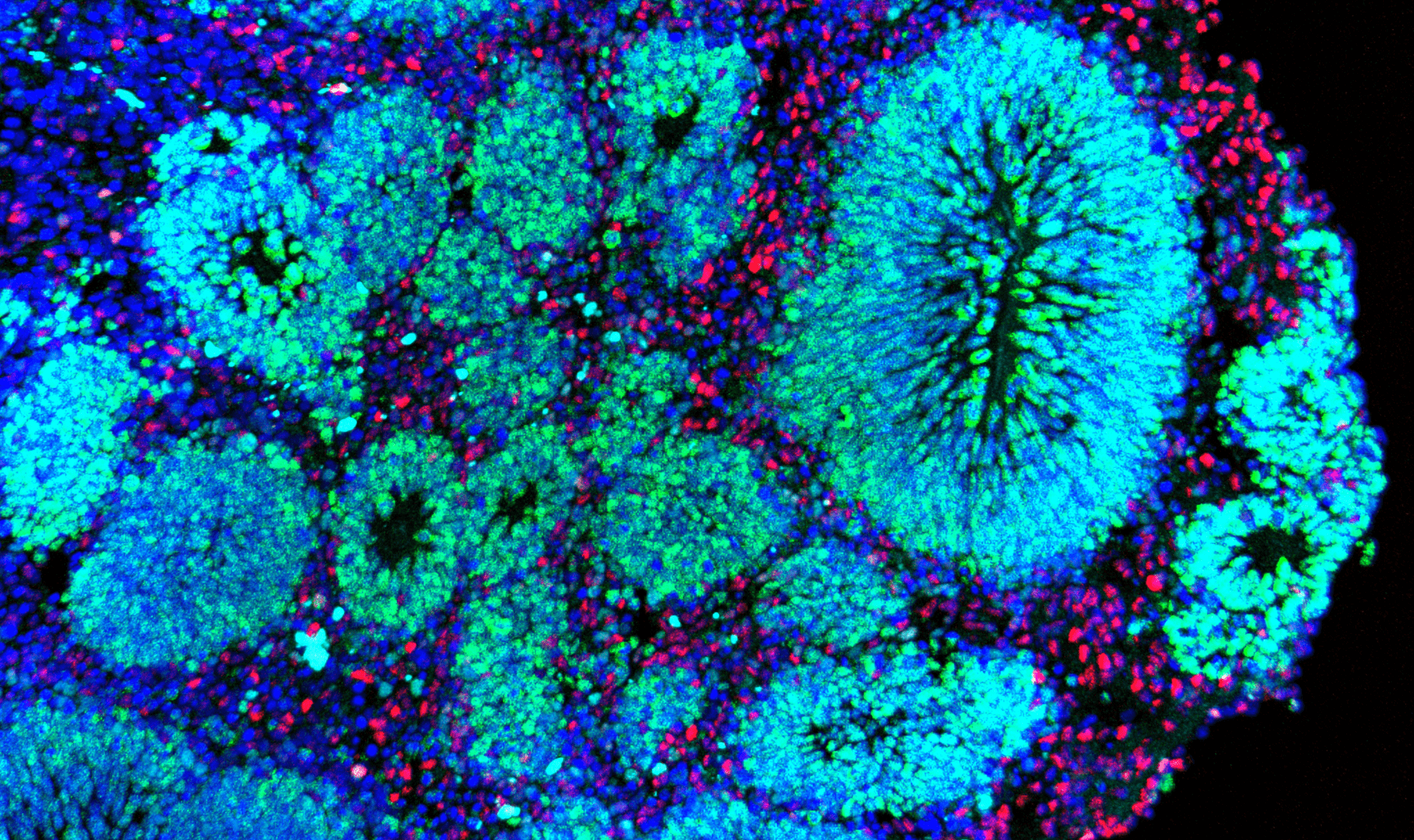
World Organoid Research Day
March 22, 2023 Today is World Organoid Research Day! Researchers at the UC Santa Cruz Genomics Institute have been working with brain organoids for years in an attempt to better understand the human brain. To raise awareness of these very special cell clusters, we put together the following Q&A: What is an organoid? If you’ve never…
-

Collaboration with NASA uses eDNA technology to monitor biodiversity
eDNA is short for “environmental DNA,” and it is a relatively new method for monitoring biodiversity that Meyer’s lab specializes in. The NASA BioSCape project will combine the eDNA that the UC Santa Cruz team collects with airborne imaging spectroscopy and lidar remote sensing with field observations to better understand the biodiversity of South Africa’s…