Author: Rose Miyatsu
-

Childhood Cancer Awareness Month Researcher Profiles: Yvonne Vasquez
“My lab studies rare cancers that occur in kids and young adults. Our lab’s goal is to learn more about pediatric cancers and identify more effective and less toxic treatments for patients.”
-

From concept to commercialization: How UCSC researchers revolutionized DNA sequencing
Nanopore sequencing technology, which has dramatically lowered the cost and increased the accuracy of genomic sequencing over the last two decades, was first patented and developed at UC Santa Cruz. Its inventors reflect on its history, as well as its seemingly unlimited potential for advancing personalized medicine and our understanding of our world.
-

Help our CALeDNA efforts: Become a citizen scientist
Julia Paskin | LAist | July 25, 2022 Researchers want your help to collect samples at four specific locations in Los Angeles as part of a much wider effort in the state to learn about changes in biodiversity. The project, called CALeDNA, for California Environmental DNA, encourages everyone to be a citizen scientist. Volunteers get a kit to…
-
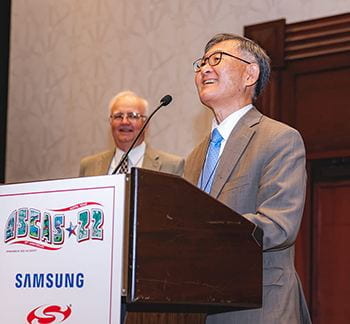
Steve Kang celebrates a career of seizing challenges
(Kang at the 2022 ISCAS Conference in Texas.) Emily Cerf | UCSC | July 25, 2022 As the first in his family to graduate college and in taking on positions as the second dean of the Baskin School of Engineering and chancellor of UC Merced, Sung-Mo “Steve” Kang has always been someone ready and willing…
-

Genomics Institute affiliates discuss importance of reference genomes for conservation
UCSC | July 21, 2022 As of 2022, the International Union for Conservation of Nature (IUCN) Red List estimates that more than 32% of fungal, plant, and animal species are threatened with extinction. This sixth mass extinction is caused by the activities and expanding biomass of humans, necessitating a distinct name for this geological epoch—the…
-

Working Toward a ‘Holy Grail’ Blood Test to Diagnose Cancer Years Before Symptoms
UCSC | July, 2022 Researchers in the Daniel Kim lab have discovered previously unknown biomarkers that are released from RNA in the very early stages of cancer. This discovery could lead to the development of tests to measure for these biomarkers in healthy-seeming patients. Detecting cancer earlier, when it is easier to treat, could save…
-
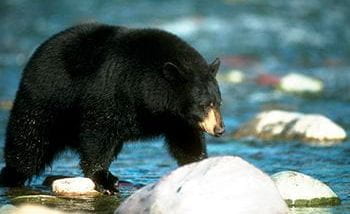
UCSC scholars join researchers statewide on a massive genomic study of California’s biodiversity
The state-funded genomics project aims to be a lasting resource for shaping conservation policy Emily Cerf | UCSC | July 6, 2022 When UC Santa Cruz postdoctoral scholar Merly Escalona assembled the first-ever reference genome for the Stephen Colbert Trapdoor Spider, she was shocked by the dataset’s unexpectedly large size. For a small invertebrate, this…
-

ASPIRE program launches to aid conservation in a changing climate
During the most severe megadrought in a millennium, a new program out of the UC Santa Cruz Genomics Institute involves students in an effort to measure changes in biodiversity and ultimately prevent them.
-

Polar bears in Southeast Greenland shed light on the species’ future in a warming Arctic
The most genetically isolated population of polar bears on the planet, they have limited access to sea ice and use ice from Greenland’s glaciers to survive Hannah Hickey | UCSC | June 16, 2022 Scientists have documented a previously unknown subpopulation of polar bears living in Southeast Greenland. The polar bears survive with limited access…
-

The team behind a tree of 10 million Covid sequences
10 million sequences of COVID-19’s genomic code have now been organized into a phylogenetic tree in the UC Santa Cruz SARS-CoV-2 Browser, which is the largest tree of genomic sequences of a single species ever assembled. This accomplishment is impressive for both the computer engineering feat of processing such a massive amount of data and…
-

100,000-year-old polar bear genome reveals ancient hybridization with brown bears
Study finds all brown bears today have some polar bear ancestry due to genetic admixture that occurred during a warm interglacial period more than 100,000 years ago
