Category: News
-

When UCSC meets Silicon Valley, great things happen
By Lynda Rogers, Dean of UCSC Silicon Valley Extension Women and men from around the world congregate in study groups, run through presentations, and prepare for class. The hubbub dies down as classes start and they disperse, taking with them their passions and ambitions. These are the professionals of Silicon Valley: the innovators, the designers, the educators,…
-
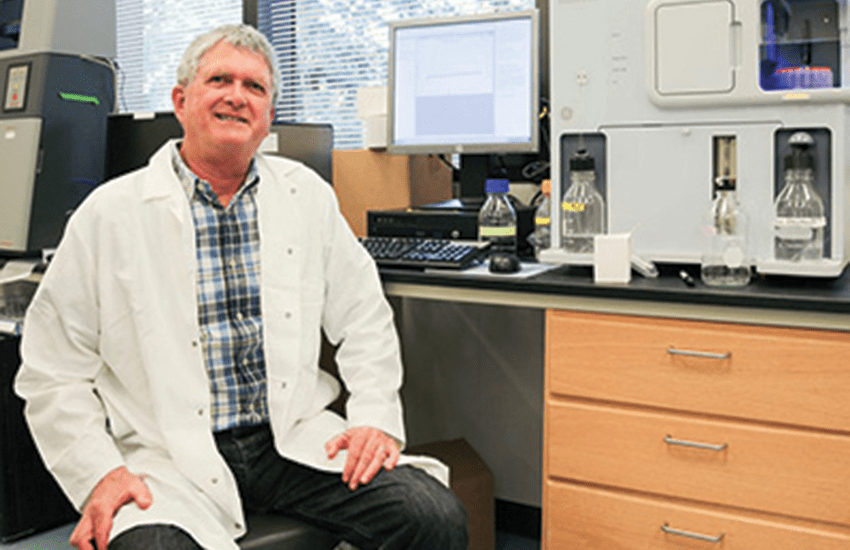
Persistence yields progress in AIDS vaccine research at UC Santa Cruz
By Tim Stephens, UCSC Public Information Office Phil Berman has been working to develop an AIDS vaccine for nearly 30 years, first at the pioneering biotech company Genentech, then as cofounder of VaxGen, and now at UC Santa Cruz, where he is the Baskin Professor of Biomolecular Engineering. Since his arrival at UC Santa Cruz…
-
TEDxSantaCruz, part of Alumni Weekend, to explore “Radical Collaboration”
By Dan White, UCSC Newscenter Expect a day of unexpected convergences, wild ideas, and surprising discoveries at TEDxSantaCruz 2015: Radical Collaboration, a time to explore interdisciplinary learning and across-the-lanes thinking. The all-day event, which starts at 9 a.m. on April 24 at the Rio Theatre, will feature a line-up of speakers from a wide variety of disciplines challenging themselves, casting…
-
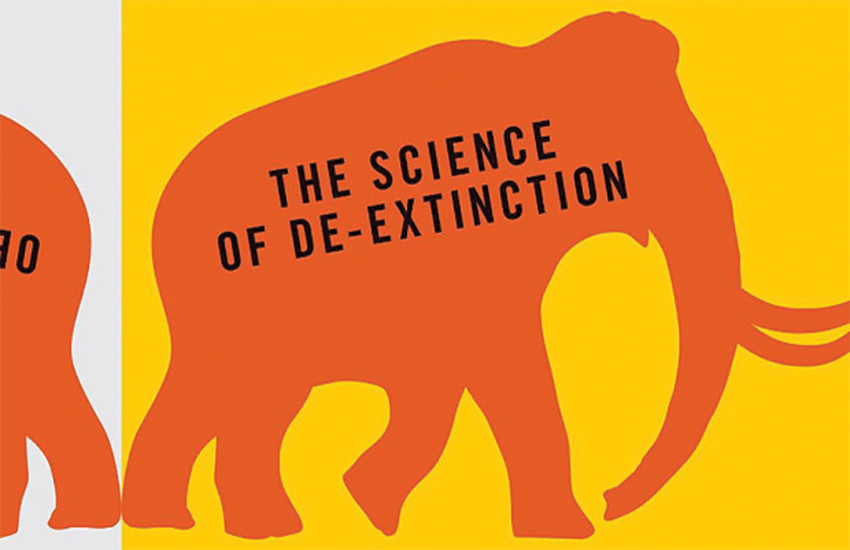
Biologist Beth Shapiro explains the science of ‘de-extinction’ in new book.
By Tim Stephens, UC Santa Cruz Public Information Office Tired of answering questions about cloning mammoths, Beth Shapiro, a professor of ecology and evolutionary biology at UC Santa Cruz, wrote a book called How to Clone a Mammoth. (Spoiler Alert: You can’t actually clone a mammoth.) Shapiro is a leading authority on ancient DNA–how to recover…
-
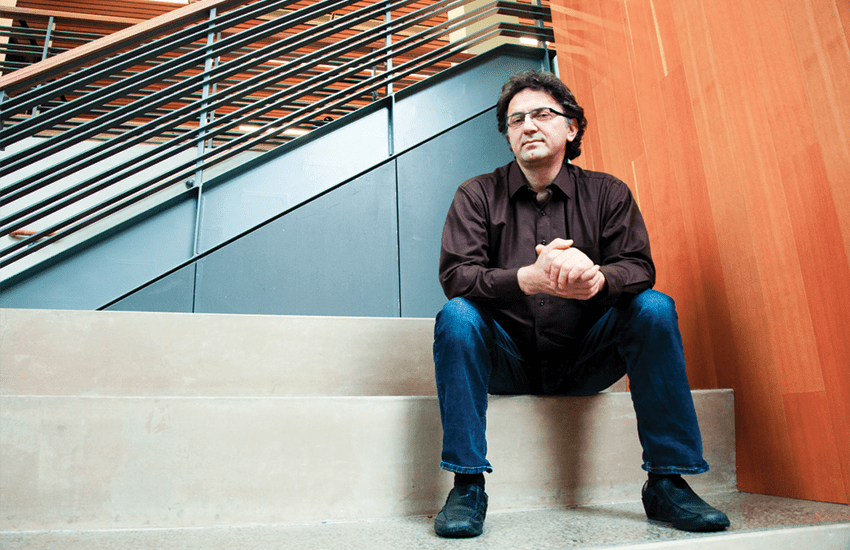
Nanopipette technique earns prize in NIH ‘Follow that Cell’ challenge
By Tim Stephens, UC Santa Cruz Public Information Office Nader Pourmand, professor of biomolecular engineering at UC Santa Cruz, is one of 16 finalists in Phase 1 of the Follow that Cell Challenge organized by the National Institutes of Health. The goal of the challenge is to stimulate the development of new tools and methods that…
-
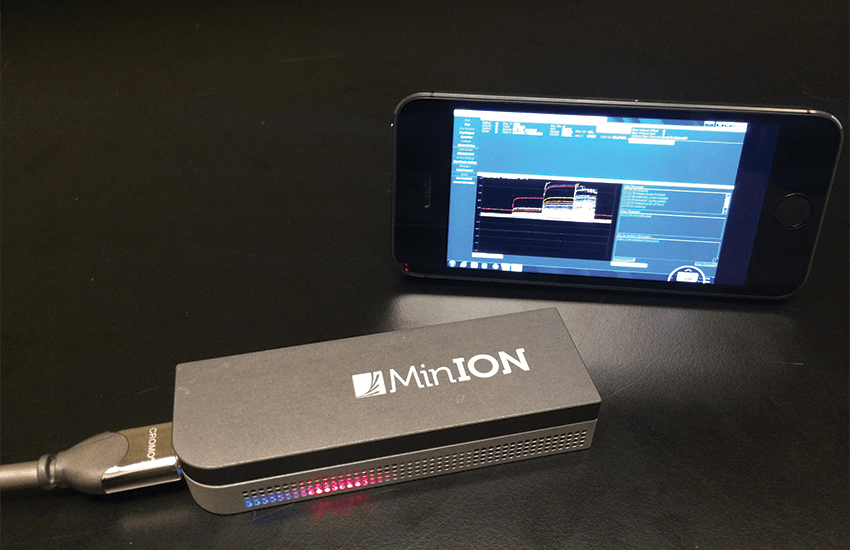
DNA sequencer the size of a mobile phone
By Branwyn Wagman, UC Santa Cruz Genomics Institute Investigators at the UC Santa Cruz Genomics Institute have optimized performance of a mobile-phone-sized MinIONTM DNA sequencer, marketed by Oxford Nanopore. Their work was reported in Nature Methods on February 16, 2015. The MinION device reads individual DNA strands base-by-base as they pass through a nanoscale pore…
-
Genomics Institute director David Haussler awarded prestigious Dan David Prize
By Tim Stephens, UCSC Public Information Office David Haussler, professor of biomolecular engineering and director of the Genomics Institute at UC Santa Cruz, has been chosen to receive the Dan David Prize, a prestigious international award endowed by the Dan David Foundation and based at Tel Aviv University. Haussler will share the $1 million prize…
-
Scientists reconstruct genome of common ancestor of crocodiles, birds, dinosaurs
Crocodiles are the closest living relatives of the birds, sharing a common ancestor that lived around 240 million years ago and also gave rise to the dinosaurs. A new study of crocodilian genomes led by scientists at UC Santa Cruz reveals an exceptionally slow rate of genome evolution in the crocodilians (a group that includes crocodiles, caimans,…
-
As species decline, so does research funding
Ecology and evolutionary biologist Terrie Williams from the UC Santa Cruz Genomics Institute responded to a dubious distinction with an op-ed in the Los Angeles Times. She was named in Sen. Tom Coburn’s (R-Oklahoma) “Wastebook 2014” for her research on mountain lions. Coburn said Williams had squandered $856,000 of taxpayer money on training mountain…
-
NCI Cloud Pilot program to boost cancer genomics data sharing, accessibility
By Tim Stephens, UCSC Public Information Office The UC Santa Cruz Genomics Institute is part of a team led by the Broad Institute of Harvard and MIT that was awarded one of three National Cancer Institute (NCI) Cancer Genomics Cloud Pilot contracts. The goal of the project, which also involves scientists at UC Berkeley, is to build…
-
UC Santa Cruz leads $11 million Center for Big Data in Translational Genomics
By Tim Stephens, UCSC Public Information Office The National Institutes of Health (NIH) has awarded $11 million to UC Santa Cruz to create the technical infrastructure needed for the broad application of genomics in medicine and biomedical research. This grant from the National Human Genome Research Institute (NHGRI) funds the Center for Big Data in Translational Genomics,…
-

UC Santa Cruz ranked first for research influence in world university rankings
By Tim Stephens, UCSC Public Information Office In the latest analysis of the world’s top universities published by Times Higher Education (THE), UC Santa Cruz ranked first in research influence as measured by the number of times its faculty’s published work is cited by scholars around the world. Published as part of the THE World University…